

Key Takeaways
- Customer segmentation improves SMS relevance, leading to higher CTR and lower opt-out rates
- Bulk SMS campaigns perform better when audiences are grouped by behaviour, not just demographics
- Segmentation enables personalised messaging without increasing operational complexity
- Compliance and consent must align with Malaysian messaging guidelines
- Combining segmentation with timing and clear CTAs improves overall campaign performance
Sending the same message to everyone might feel efficient, but it is rarely effective.
In SMS marketing, relevance matters more than reach. A well-timed message to the right segment often outperforms a mass campaign sent to thousands.
This guide explains how customer segmentation works in SMS marketing, how to apply it in real scenarios, and how it improves results across bulk messaging campaigns.
What is Customer Segmentation in SMS Marketing?
Customer segmentation in SMS marketing is the process of dividing your audience into smaller groups based on shared characteristics such as behaviour, preferences, or purchase history, allowing businesses to send more relevant and targeted messages.
How Does Customer Segmentation Improve SMS Marketing Results?
Segmentation increases relevance, which directly improves engagement and conversion rates.
When messages match user intent, they are more likely to be read, clicked, and acted upon.
Comparison: Generic vs Segmented SMS
| Campaign Type | Message Style | Typical Outcome |
| Mass SMS | Same message for all | Lower CTR, higher opt-outs |
| Segmented SMS | Tailored messaging | Higher engagement, better ROI |
Real-world scenario: A retail brand sends a general discount to all users. Another campaign targets only repeat buyers with a loyalty offer. The second campaign typically performs better because it aligns with user behaviour.
What Types of Customer Segments Work Best for SMS Campaigns?
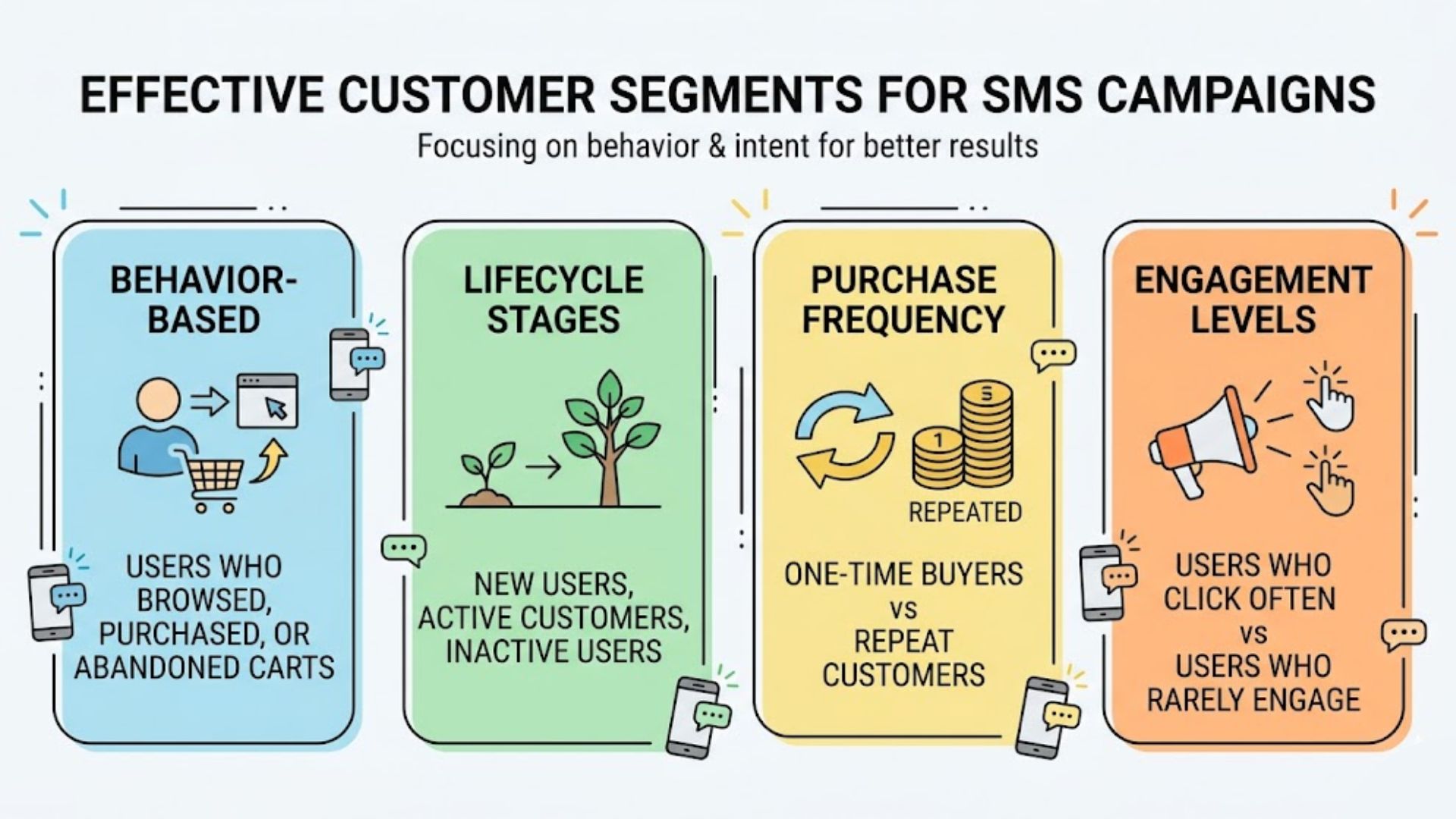
Effective segmentation goes beyond basic demographics and focuses on behaviour and intent.
Common segmentation types:
Behaviour-based segments
Users who browsed, purchased, or abandoned cartsLifecycle segments
New users, active customers, inactive usersPurchase frequency segments
One-time buyers vs repeat customersLocation-based segments
Region-specific promotions or store updatesEngagement segments
Users who click often vs users who rarely engage
Practical insight: A customer who abandoned a cart responds better to a reminder SMS than a generic promotional blast.
How Do You Apply Segmentation in Bulk SMS Campaigns?
Bulk SMS does not mean sending one message to everyone, it means sending the right message at scale.
Modern bulk SMS platforms allow businesses to:
- Upload segmented contact lists
- Trigger automated campaigns
- Personalise messages dynamically
Example workflow:
- Identify segment (e.g. inactive users)
- Create targeted message
- Schedule send time based on behaviour
- Track engagement and refine
Businesses often combine this with strategies discussed in Bulk SMS vs SMS Blaster, where targeting plays a major role in performance differences.
Why is Compliance Important When Segmenting SMS Audiences?
Segmentation must still follow regulatory guidelines on consent and messaging practices.
In Malaysia, businesses need to ensure:
- Users have opted in to receive messages
- Messaging purpose is clear
- Opt-out options are provided
For a deeper breakdown of requirements, refer to MCMC SMS regulations and compliance guidelines, which outline acceptable practices for messaging campaigns.
Practical note: Poor segmentation combined with non-compliant messaging increases the risk of complaints and reduced deliverability.
How Does Segmentation Improve eCommerce SMS Campaigns?
Segmentation allows eCommerce businesses to match messages with buying intent.
Example use cases:
- Cart abandonment reminders
- Product restock alerts
- Repeat purchase incentives
- Flash sale notifications for active users
These strategies are commonly used in ecommerce SMS marketing campaigns that focus on timing and relevance, where segmented messaging significantly improves conversion rates.
One-Way vs Two-Way SMS: Does Segmentation Still Matter?
Yes, segmentation remains critical regardless of messaging type.
In one way SMS campaigns where replies are not expected, segmentation ensures the message still feels relevant and actionable.
In two-way SMS:
- Segmentation helps guide conversation flows
- Responses can further refine audience segments
Insight: Even without replies, a well-segmented one-way message performs better than a generic message.
Common Mistakes in Customer Segmentation for SMS
Segmentation improves results, but only when applied correctly.
1. Over-segmentation
Too many segments make campaigns difficult to manage.
2. Outdated data
Old or inaccurate data reduces relevance.
3. Ignoring user behaviour
Demographics alone are not enough.
4. Inconsistent messaging
Different segments receiving unclear or conflicting messages.
5. No testing
Without testing, it is hard to identify what works.
Still Unsure How to Structure Your SMS Segments?
Start simple with a few key segments, then refine based on performance data and user behaviour.
Customer Segmentation in SMS Marketing: Why It Matters
Customer segmentation is one of the most practical ways to improve SMS marketing performance without increasing cost.
Instead of sending more messages, segmentation helps businesses send smarter messages.
Whether you are running bulk SMS campaigns, targeted SMS marketing flows, or transactional messaging, aligning your message with the right audience segment is what drives consistent engagement and long-term results.
To fully unlock the power of segmentation, you also need the right infrastructure in place. A reliable SMS service provider ensures your messages are delivered speedily, securely, and at scale, so the right message truly reaches the right audience at the right time. If you’re looking to improve deliverability and campaign performance, now is the time to explore a solution that fits your business needs and start optimizing your SMS strategy today.