
The Essentials of WhatsApp API in Malaysia
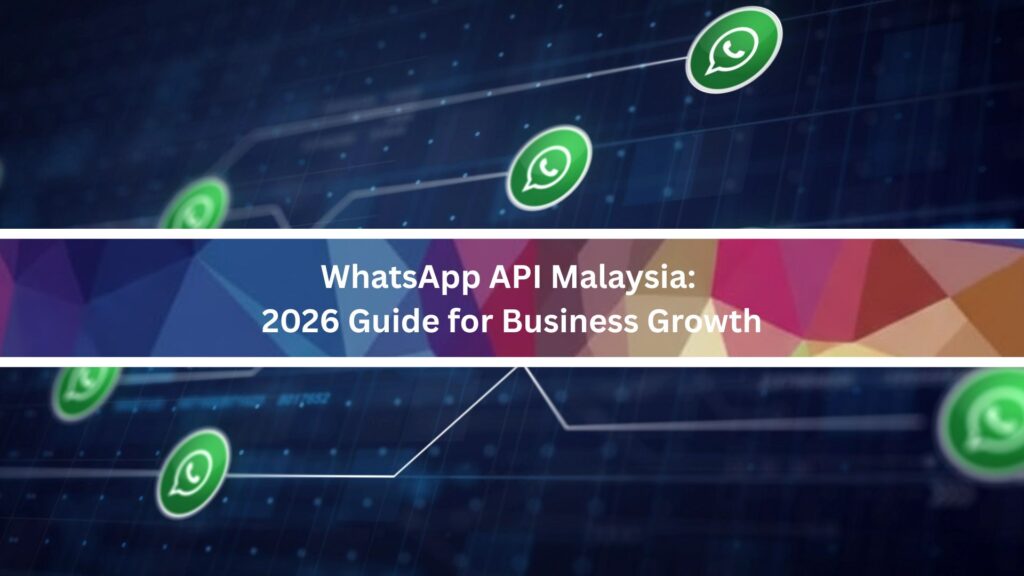
In 2026, the WhatsApp API Malaysia is a specialised communication interface designed for medium to large enterprises to send high-volume, automated messages. Unlike the standard WhatsApp app, the API allows for multiple user logins, CRM integration, and automated workflows. It is primarily used for sending marketing broadcasts, utility updates (order tracking), and authentication codes (OTP). While Meta manages the infrastructure, businesses access the API through verified Business Solution Providers (BSPs) to ensure compliance and high delivery rates.
Understanding WhatsApp API Malaysia: A 2026 Overview
For years, Malaysian businesses relied heavily on Bulk SMS for broadcasting and OTPs. While SMS remains a robust, internet-independent tool, the introduction of the WhatsApp Business API has added a layer of interactivity and rich media that traditional texting cannot match.
In the current digital landscape, “WhatsApp API Malaysia” is more than just a keyword; it represents a shift in how local brands in Kuala Lumpur, Penang, and beyond interact with their customers. From retail giants sending seasonal catalogs to startups verifying users via WhatsApp OTP, the platform has matured into a multi-functional business asset.
The Core Difference: App vs. API
It is important to distinguish between the WhatsApp Business App (the free app on your phone) and the WhatsApp Business API.
- The App: Ideal for micro-businesses; limited to one or two users; manual broadcasting.
- The API: Built for scale; supports unlimited agents; allows for automation (chatbots) and secure integration with your existing databases.
How WhatsApp API Pricing Works in 2026
Meta has refined its pricing model to be more transparent, moving toward a category-based, per-message structure. In Malaysia, costs are determined by who initiates the chat and the category of the message template.
Message Category | Description | Typical Use Case |
Marketing | Business-initiated promotional content. | Sales alerts, discount codes, newsletters. |
Utility | Business-initiated transactional content. | Order confirmations, shipping updates. |
Authentication | Secure verification codes. | OTPs for logins or password resets. |
Service | User-initiated (free-form) replies. | Customer support inquiries. |
Tip: In 2026, Meta offers a 72-hour free window for any conversations started via “Click-to-WhatsApp” ads. Additionally, the first 1,000 service (inbound) conversations per month are often provided free of charge by Meta to help businesses get started.
Comparing WhatsApp API vs. Bulk SMS
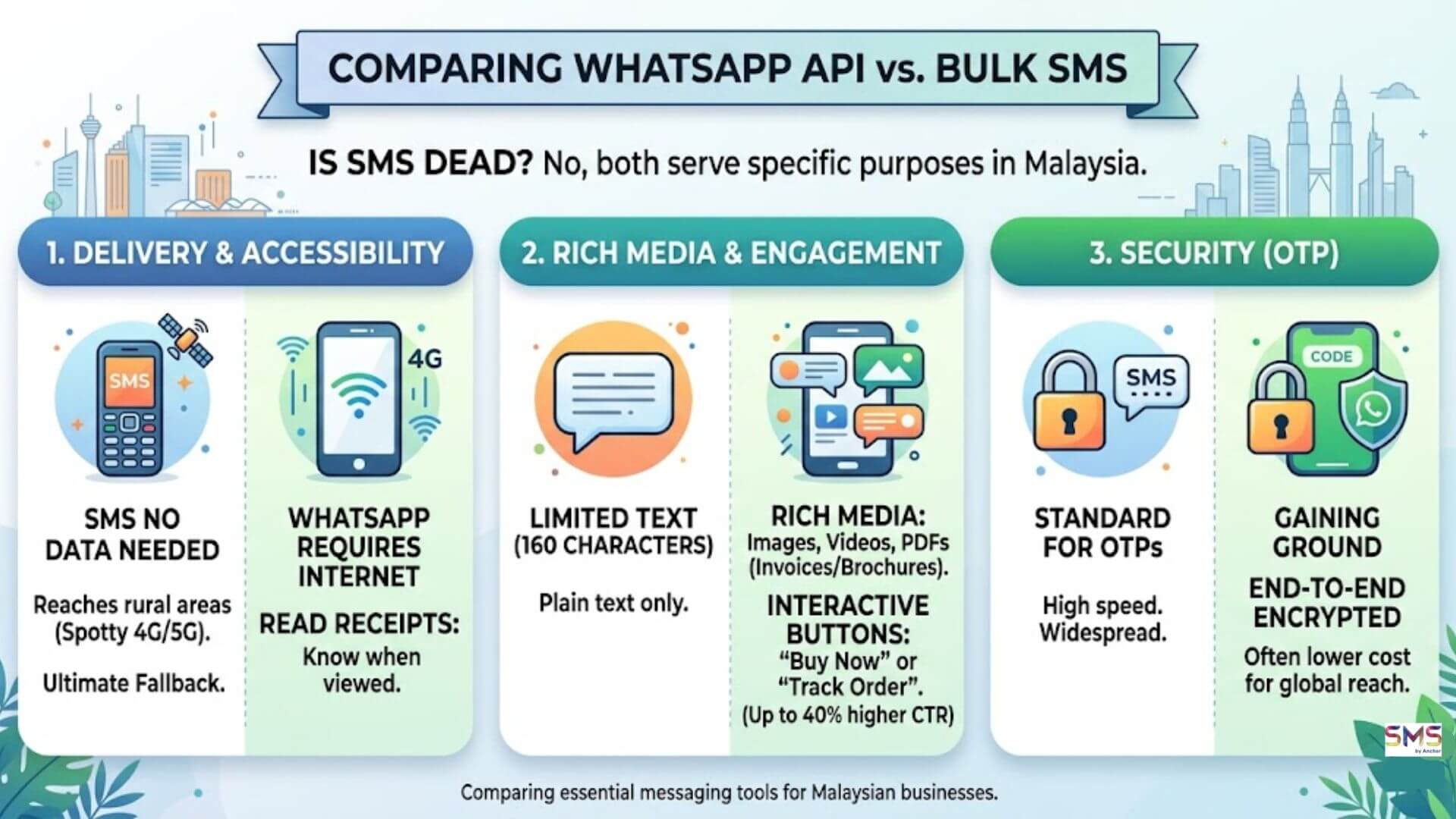
As a provider of SMS services, we often get asked: Is SMS dead? The short answer is no. Both tools serve specific purposes in the Malaysian market.
1. Delivery & Accessibility
SMS does not require a data connection or a smartphone. For critical alerts or reaching demographics in rural areas with spotty 4G/5G, SMS is the ultimate fallback.
WhatsApp requires internet access but offers a read receipt feature, giving businesses data on exactly when a customer viewed the message.
2. Rich Media & Engagement
SMS is limited to 160 characters of plain text.
WhatsApp API allows for:
- High-resolution images and videos.
- PDF invoices and brochures.
- Interactive Buttons: “Buy Now” or “Track Order” buttons that boast click-through rates up to 40% higher than standard links.
3. Security (OTP)
While Bulk SMS is the standard for OTPs due to its speed, WhatsApp OTPs are gaining ground because they are end-to-end encrypted and often cost less than international SMS rates for businesses with a global customer base.
Key Benefits for Malaysian Businesses
Scalable Bulk Messaging
Using a verified API prevents the “banning” risks associated with using personal accounts for bulk messaging. You can send thousands of messages to opted-in customers while maintaining a professional “Verified” profile (the Green Tick).
Improved Customer Trust
A WhatsApp Business profile displays your address, website, and email. When a customer receives a message from a “Verified” account, the trust barrier is lowered compared to receiving a text from a random 5-digit shortcode.
Cost-Effective Automation
By integrating a chatbot with your WhatsApp API, you can handle up to 80% of routine FAQs (like “Where is my parcel?” or “What are your opening hours?”) without human intervention, significantly lowering operational costs.
Selecting a Provider in Malaysia
When looking for a partner to manage your messaging, look for a provider that offers:
- Local Support: Understanding the Malaysian regulatory environment (MCMC guidelines).
- High Uptime: Especially critical for OTP services where every second counts.
- Tiered Pricing: Flexible plans that grow as your message volume increases.
While the WhatsApp API offers incredible engagement, a holistic strategy often includes Bulk SMS as a reliable backbone for mission-critical notifications.
Conclusion
The WhatsApp API Malaysia is a powerful tool for any business looking to modernise its communication. However, the most successful brands don’t choose between SMS and WhatsApp, they use them together. Use WhatsApp for rich engagement and marketing, and keep Bulk SMS for guaranteed delivery of critical alerts.
Ready to streamline your business communication? Whether you need high-speed Bulk SMS for your next campaign or reliable OTP services for user security, our team provides the infrastructure you need to reach your customers instantly. Explore our professional SMS marketing solutions today to ensure your messages always land where they belong.