

Key Takeaways
- Scale and Speed: Big data involves massive, fast-moving datasets that traditional software cannot process efficiently or affordably.
- Strategic Growth: Modern big data analytics helps businesses uncover hidden customer patterns, optimise inventory, and reduce operational waste.
- Core Framework: The ecosystem relies on five core pillars: volume, velocity, variety, veracity, and ultimate commercial value.
- Accessible Tech: Small businesses can leverage cloud-based tools to access big data technology without expensive upfront infrastructure investments.
- Actionable Results: Integrating clean data with direct communication channels improves customer retention and maximises daily marketing return on investment.
Managing a business today without looking at your data is like driving through a sudden downtown Kuala Lumpur downpour without windshield wipers, you are moving, but you cannot see where you are going. Whether it is tracking thousands of daily point-of-sale transactions, monitoring inventory levels, or keeping up with shifting customer habits on messaging apps, modern businesses generate more information than ever before.
At its core, big data refers to massive, complex datasets that grow exponentially over time, requiring specialised technology rather than traditional software to store, process, and analyze for actionable insights. This guide unpacks how big data technology works and how you can use practical analytics to optimise your daily operations and boost profitability.
Feature | Traditional Data | Big Data | Business Impact |
Volume | Megabytes to Gigabytes (Standard spreadsheets) | Terabytes to Petabytes (Massive digital footprints) | Requires scalable cloud storage solutions. |
Speed | Hourly or batch updates | Real-time streaming data | Enables instant decision-making on the fly. |
Format | Structured tables and clean rows | Unstructured text, audio, images, and logs | Needs advanced tools to find hidden patterns. |
Infrastructure | Standard office computers and local servers | Distributed computing networks | Lowers long-term operational costs via automation. |
What Exactly Counts as Big Data in Today’s Market?
Big data goes beyond simple spreadsheets, encompassing the massive trail of digital interactions your customers leave behind every single day.
Every time an item is scanned at a checkout counter, a delivery truck updates its GPS location, or a visitor clicks on an e-commerce storefront, new data points are created. When you multiply these single actions across thousands of customers over months and years, your business is no longer dealing with simple records, you are handling a goldmine of strategic assets.
To turn this mountain of information into clear business decisions, companies rely on specialised infrastructure designed to process mixed formats without crashing. Instead of letting raw numbers sit idle on a hard drive, businesses map them into a structured data model that connects customer actions to inventory levels. This makes it easy for management to spot buying trends before the competition does.
Real-World Scenario: Consider a regional grocery chain during a major festive season like Hari Raya or Chinese New Year. Instead of guessing how much stock to order, they use historical sales logs, real-time supply chain updates, and local weather patterns to predict exact inventory needs, cutting down on fresh food wastage by up to 30%.
How Does Big Data Analytics Turn Raw Information Into Profit?
Turning messy numbers into clear strategies requires analytical tools that find patterns where the human eye sees chaos.
Raw data by itself is just digital noise, but big data analytics cleans up that noise to reveal exactly what your customers want, when they want it, and how much they are willing to pay. This allows your team to move away from gut-feeling business decisions and transition toward predictable, repeatable strategies that protect your profit margins.
For instance, advanced customer segmentation allows businesses to group audiences by their actual purchasing habits, sending hyper-targeted offers instead of generic broadcasts that get ignored. By using data-driven insights alongside an efficient platform for sms marketing malaysia, brands can instantly reach customers with personalised deals right when they are most likely to buy, ensuring higher open rates and better engagement.
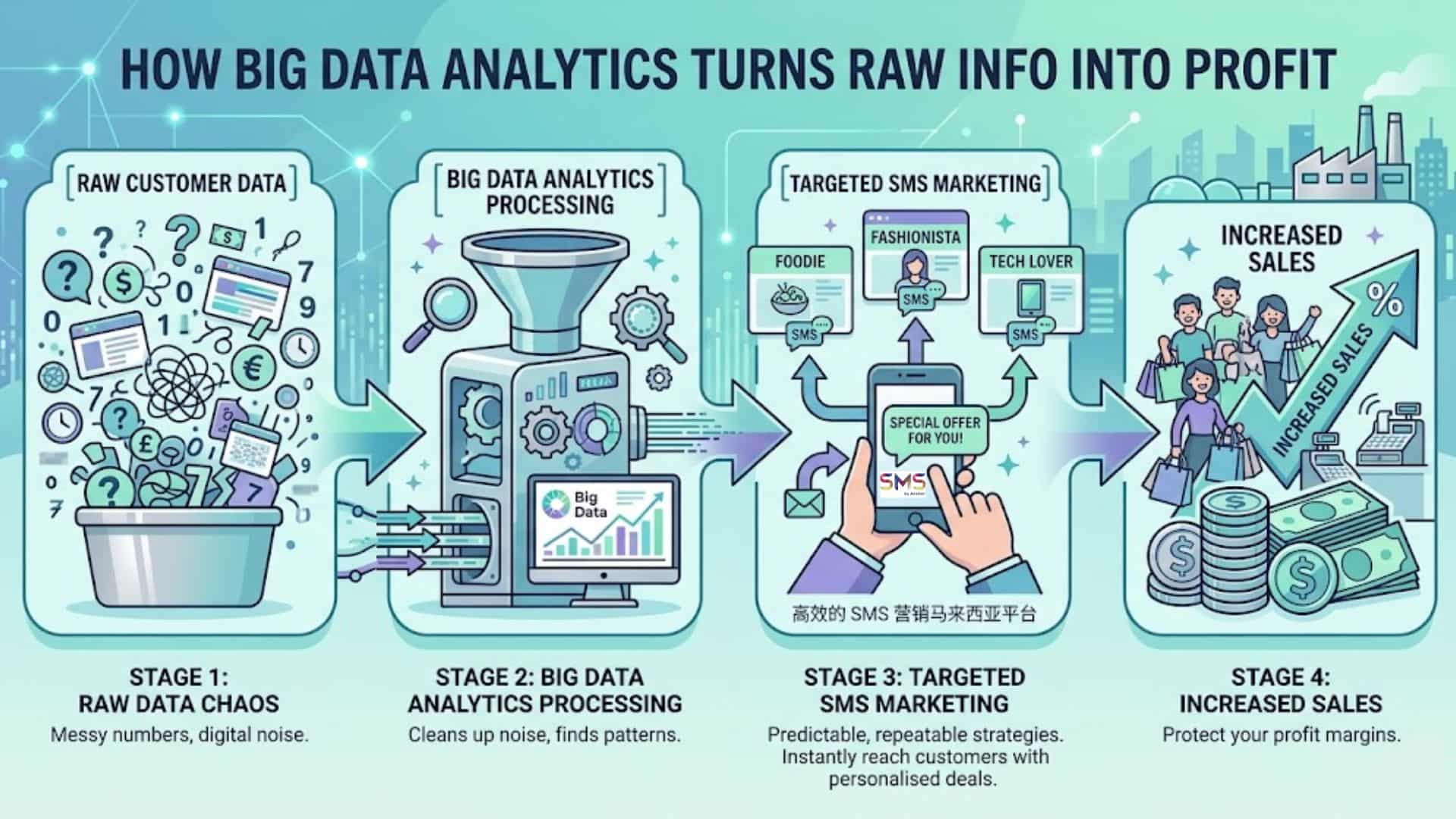
[Raw Customer Data] ➔ [Big Data Analytics Processing] ➔ [Targeted SMS Marketing] ➔ [Increased Sales]
Why Should Smaller Businesses Care About Big Data Technology?
You do not need an enterprise-sized IT budget to benefit from advanced data processing tools anymore.
A common misconception is that data engineering is exclusively reserved for multi-national corporations with massive tech departments. Thanks to modern cloud-based software-as-a-service (SaaS) models, any growing business can rent computing power on demand, analysing market trends without buying expensive physical servers.
By embracing digital transformation early, smaller companies can react to market shifts much faster than rigid corporate giants. Knowing your exact customer acquisition cost and lifetime value allows you to allocate your tight marketing budgets to the exact channels that deliver actual revenue.
“Data is no longer an asset exclusive to tech giants. Today, the neighborhood storefront with a smart point-of-sale system has more practical computing insight at its disposal than enterprise corporations had two decades ago.”— SMS Anchor
What Are the Real-World Challenges of Managing Massive Datasets?
Collecting data is easy, but keeping it accurate, secure, and organised remains a major hurdle for growing teams.
The biggest risk in data management is “bad data”, incorrect addresses, duplicate entries, or outdated customer profiles that lead to wasted marketing spend. If your system is feeding flawed information into your analytical tools, the business strategies you generate from them will be equally flawed.
Data privacy and local regulatory compliance (e.g., MCMC regulations) are also critical considerations when storing customer details. Securing your database against external threats while keeping it easily accessible for your internal team requires a balanced, secure approach to your digital infrastructure.
- Data Silos: Information trapped in separate systems (e.g., accounting software not talking to CRM tools).
- Skills Gap: A lack of basic internal training on how to interpret dashboards and performance metrics.
- Security Constraints: Ensuring customer phone numbers and purchase histories are protected against data leaks.
Demystifying What is Big Data to Drive Real Growth
Understanding what is big data is simply the first step toward building a smarter, more resilient business operations model. By shifting your perspective from viewing data as a byproduct of business to treating it as a core growth engine, you position your brand to scale efficiently without expanding your overhead.
The goal of analysing these massive datasets is to take faster, more meaningful action. By integrating your data insights with an automated sms gateway malaysia, you can automatically trigger personalised updates, verification codes, and timely promotions that keep your business at the top of your customers’ minds.